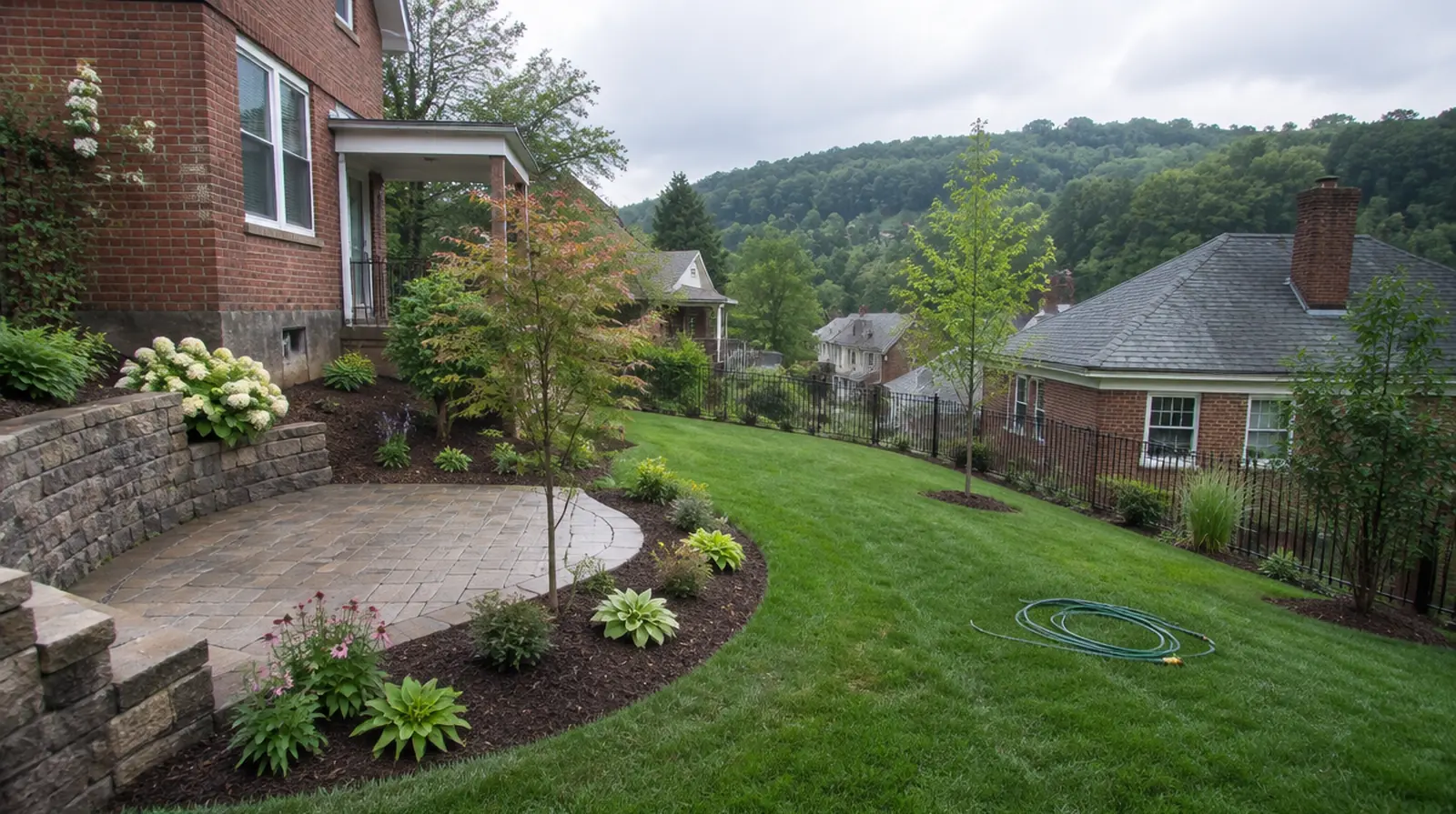
A plan built around how the yard is used
Planning landscaping work in Charleston means connecting the plants you see with the soil, grading and surface water underneath them. It keeps the conversation attached to the yard that is actually in front of you. Begin with a description of each area and how you want to use it when the work is finished.
Landscape Design: note utilities and easements
buried lines, meters and access easements limit where trees and structures can be placed. For this part of a Charleston project, agree protection for the lawn and a temporary route for materials. More on landscape design sits on its own page, written for Charleston yards rather than as a generic brochure.
Tree and Shrub Care: debris and haul-away
For tree and shrub care, a careful review should show that chipping, hauling or leaving wood on site should be decided before work starts. For this part of a Charleston project, set down what the finished area should look like a full season after the work. See the tree and shrub care guide for the planning questions, site conditions and finish decisions that belong to this work.
Planting and Mulch Beds: replacing failed plants
For planting and mulch beds, from a planning standpoint, if plants decline, the cause needs a close look before the same plant goes back in. For this part of a Charleston project, record the sun and surface water of that area and how it is used during the week. Open the planting and mulch beds page when you want the Charleston-specific planning notes for that option.
Sod Installation: first-month watering
For sod installation, keep this in view: new sod needs frequent watering at first; say who is responsible for it. For this part of a Charleston project, agree protection for the lawn and a temporary route for materials. Open the sod installation page when you want the Charleston-specific planning notes for that option.
Hardscaping and Patios: a check for surface water around hardscape
For hardscaping and patios, on this yard, remember that a large paved area adds surface water; plan where that water goes. For this part of a Charleston project, identify buried utilities, sprinkler lines and lighting wire before the ground is touched. The hardscaping and patios page outlines the scope questions, yard conditions and handover points specific to that option.
Landscape Lighting: avoid glare
On this yard, remember that fixtures aimed at eyes or neighbors' windows make a yard less comfortable, not more. For this part of a Charleston project, agree protection for the lawn and a temporary route for materials. Open the landscape lighting page when you want the Charleston-specific planning notes for that option.
Seasonal Yard Cleanup: gutters and drains, in practical terms
For seasonal yard cleanup, the field note can read: clogged downspouts and yard drains cause wet spots; say whether they are included. For this part of a Charleston project, agree protection for the lawn and a temporary route for materials. A longer discussion of seasonal yard cleanup is one page away, with the checks that belong on site.
Retaining Walls: height limits and permits
For retaining walls, from a planning standpoint, taller walls may need engineering or a permit; that question belongs early. For this part of a Charleston project, set down what the finished area should look like a full season after the work. If this is the work you are comparing, the retaining walls page collects the questions that usually change the price.
Irrigation Systems: leak checks, in practical terms
For irrigation systems, a careful review should show that wet spots, soggy beds and a higher water bill are signs to check valves and lines. For this part of a Charleston project, record the sun and surface water of that area and how it is used during the week. Open the irrigation systems page when you want the Charleston-specific planning notes for that option.
Lawn Care and Mowing: seasonal start and stop
For lawn care and mowing, the field note can read: the first and last mow of the year should be defined so billing matches the season. For this part of a Charleston project, say whether watering and follow-up care are included or left to the household. The lawn care and mowing write-up stays with method, access and finish, so you can read it beside another proposal.
Access and weather in Charleston
For a Charleston property, set down which parts of the lot take the hardest weather. Humid summers, cold wet winters and heavy spring rain on steep slopes are not an abstract backdrop; they show up in the turf, the beds and the low spots.
Along the hillside streets above the Kanawha River and the neighborhoods along the valley, neighboring yards may show anything from tidy lawns to overgrown beds. A consistent plan for Charleston, WV is easier to keep if the existing condition is noted early.
Freeze-thaw cycles can heave newly set pavers or edging if the base was not compacted properly. If a pet or child uses the yard daily, set the safe route and gate rules before the opening work day, not after the first day of digging.
Compare the same boundary in the ground
Price differences often come from soil preparation, base depth, surface water and haul-away, not from the plant variety alone. Ask who calls in the underground utility markings before any digging, and who is responsible if a sprinkler line is cut.
Arrange the information before the next step
Explain what you already know about standing water, thin turf or struggling plants, and how long the problem has been there.
Details that belong in the first write-up
Further context in Charleston for Landscaping work
On the hillside streets above the Kanawha River and the neighborhoods along the valley, it is common to see well-kept lawns beside yards that need a full reset on the same block. Keep this with the landscaping work notes for Charleston.
Wind, sun and moisture here, humid summers, cold wet winters and heavy spring rain on steep slopes, belong in the same conversation as plant choice and soil preparation. Keep this with the landscaping work notes for Charleston This is written with 3712 Venable Ave, Suite 45 in 25304 in mind.
Daily use matters: a yard that stays in use in Charleston needs a tighter work boundary than a vacant lot. Keep this with the landscaping work notes for Charleston This is written with 3712 Venable Ave, Suite 45 in 25304 in mind.
Carry those Charleston observations into the job notes so they are not lost after the first yard review. Keep this with the landscaping work notes for Charleston.
Read about the project approach or view contact and planning details.
What 3712 Venable Ave, Suite 45, Charleston, WV 25304 adds to the landscaping work file
Landscaping work at 3712 Venable Ave, Suite 45 is written against the side yard route, before a start day is promised. Along the hillside streets above the Kanawha River and the neighborhoods along the valley, neighboring yards may already differ; a plan for landscaping work at 3712 Venable Ave, Suite 45 in 25304 should say how this work will sit beside them.
Because the property is among hillside homes, older brick houses and yards terraced into steep ground, staging at 3712 Venable Ave, Suite 45 belongs in the same file as the plant list for this landscaping work job. From 3712 Venable Ave, Suite 45, access looks like this: steep driveways, outdoor stairs and narrow lots where erosion never fully stops.
valley fog and hillside shade change how much sun each yard actually gets Those conditions at 3712 Venable Ave, Suite 45 are a reason to look at the side yard route more than once. Weather around 3712 Venable Ave, Suite 45 follows humid summers, cold wet winters and heavy spring rain on steep slopes, which is the setting for landscaping work at Suite 45.
The postal code 25304 and the listing at 3712 Venable Ave, Suite 45, Charleston, WV 25304 should be confirmed on the order so soil, stone and plant deliveries for this landscaping work work arrive at the right place.